Buy bussines.eu ?
We are moving the project
bussines.eu .
Are you interested in purchasing the domain
bussines.eu ?
domain@kv-gmbh.de · 0541-91531010
Buy bussines.eu ?
What are conjunctional clauses, relative clauses, demonstrative clauses, and infinitive clauses?
Conjunctional clauses are dependent clauses that are introduced by a conjunction, such as "because," "although," or "while." They provide additional information about the main clause in a sentence. Relative clauses are also dependent clauses that provide more information about a noun in the main clause. They are introduced by relative pronouns like "who," "which," or "that." Demonstrative clauses are dependent clauses that function as adjectives and provide more information about a noun in the main clause. They are introduced by demonstrative pronouns like "this," "that," "these," or "those." Infinitive clauses are dependent clauses that are formed with an infinitive verb (to + base form of the verb). They can function as nouns, adjectives, or adverbs in a sentence. **
Are conjunctive clauses always adverbial clauses?
No, conjunctive clauses are not always adverbial clauses. While adverbial clauses are a type of conjunctive clause that function as adverbs to modify verbs, adjectives, or other adverbs, there are also other types of conjunctive clauses. For example, there are conjunctive clauses that function as noun clauses, such as in "I know that you are busy." In this sentence, "that you are busy" is a conjunctive clause functioning as a noun clause, not an adverbial clause. Therefore, conjunctive clauses can serve various grammatical functions beyond just adverbial clauses. **


Similar search terms for Clauses
Top-Angebote
Products related to Clauses:
-
William Collins Collins Business Secrets 10 Books Collection Box Set - Various Authors - Paperback - Leadership, Finance, Marketing & Management GuidesThe Collins Business Secrets 10 Books Collection Box Set brings together ten pocket-sized guides from the trusted Collins Business Secrets series, each written by a specialist author. Covering communication, finance, leadership, management, marketing, negotiating, people management, presentations, project management, and selling, this brand new paperback set distills practical, jargon-free advice into quick, digestible reads. Ideal for professionals, managers, and students, it's a ready-made business library that fits neatly on a shelf and makes a thoughtful gift.14,99 £*Shipping: 2,99 £Secure redirect to the provider
-
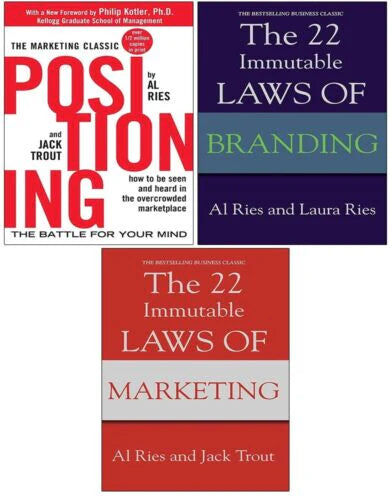
Various Publishers 22 Immutable Laws Branding, Marketing & Positioning 3 Book Set by Al Ries, Jack Trout & Laura Ries - Paperback Business Strategy ClassicsThis three-book paperback set brings together three influential marketing texts written by Al Ries alongside collaborators Jack Trout and Laura Ries. The collection distils decades of branding and marketing strategy into short, memorable 'laws' and case studies. The set includes The 22 Immutable Laws of Branding, The 22 Immutable Laws of Marketing, and Positioning: The Battle for Your Mind. Ideal for business students, entrepreneurs, marketers, and anyone building a brand, it's a practical, portable reference library that has shaped how the modern business world thinks about positioning, branding, and market leadership.28,99 £*Shipping: 2,99 £Secure redirect to the provider
-
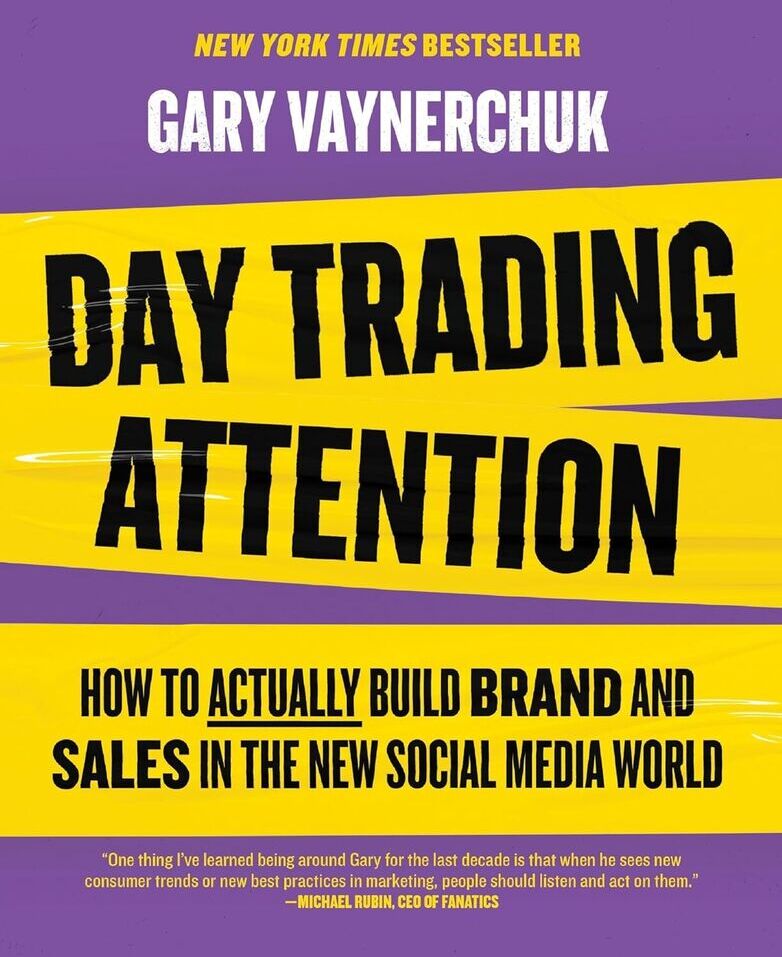
Harper Business Day Trading Attention & Jab Jab Jab Right Hook by Gary Vaynerchuk - Hardcover 2 Book Marketing Set - Business Strategy & Social Media AdvertisingThis two-book bundle brings together Gary Vaynerchuk's most influential marketing titles in one brand-new hardcover set. Day Trading Attention (2024) updates the playbook for today's social platforms, while Jab, Jab, Jab, Right Hook (2013) remains the foundational storytelling guide that built GaryVee's reputation. Together they offer a before-and-after view of how attention, content, and advertising have evolved — essential reading for marketers, founders, and content creators. The books are published by Harper Business and are suitable for adult readers interested in business and marketing.3,89 £*Shipping: 2,99 £Secure redirect to the provider
-
Lookout Spiele Oh My Goods! Big Box - Strategy Card Game - Production Chains & Resource ManagementBuild a productive settlement in Oh My Goods! Big Box, a strategy card game about managing production chains and developing a successful economy. Players take the roles of workers who produce tools, barrels, iron, glass, and other goods. Plan carefully, connect your production chains, and use your resources efficiently to gain victory points. This Big Box edition includes the original Oh My Goods! game together with two expansions: Longsdale in Revolt and Escape to Canyon Brook. The combined contents offer additional scenarios and challenges for players who want to expand their game. Suitable for players who enjoy strategic card games, resource management, and building an efficient engine over multiple rounds.23,20 £*Shipping: 3,95 £Secure redirect to the provider


-
What are relative clauses and conjunctional clauses?
Relative clauses are clauses that provide additional information about a noun in the main clause. They are introduced by relative pronouns such as "who," "which," "that," and "whom." For example, in the sentence "The book that I read is very interesting," the relative clause "that I read" provides more information about the noun "book." Conjunctional clauses, on the other hand, are clauses that are connected to the main clause by conjunctions such as "and," "but," "or," "if," and "because." They can express relationships such as addition, contrast, alternative, condition, and cause. For example, in the sentence "I will go to the park if the weather is nice," the conjunctional clause "if the weather is nice" expresses a condition for the action in the main clause. **
-
What are the French conditional clauses (si-clauses)?
French conditional clauses, also known as si-clauses, are used to express a hypothetical situation and its potential outcome. They consist of two parts: the si clause (if clause), which describes the condition, and the main clause, which describes the potential result. The si clause is typically formed using the conjunction "si" followed by the imperfect tense or the pluperfect tense, while the main clause is formed using the conditional tense. These clauses are commonly used to talk about what would happen in certain situations if a specific condition were met. **
-
How can one recognize main clauses and subordinate clauses?
Main clauses can stand alone as complete sentences, while subordinate clauses cannot. Subordinate clauses often begin with subordinating conjunctions such as "although," "because," "if," "when," or "while." They also often contain a subject and a verb, but they do not express a complete thought on their own. Main clauses, on the other hand, express a complete thought and can function as independent sentences. By identifying these characteristics, one can recognize main and subordinate clauses in a sentence. **
-
How can adverbial clauses be used as subordinate clauses?
Adverbial clauses can be used as subordinate clauses to provide additional information about the main clause. They can modify the verb in the main clause by expressing time, place, manner, condition, reason, purpose, or concession. For example, in the sentence "She went to bed after she finished her homework," the adverbial clause "after she finished her homework" provides information about the timing of the main action "She went to bed." Adverbial clauses are introduced by subordinating conjunctions such as after, before, while, since, because, if, although, etc. **

How can subordinate clauses be rewritten as main clauses?
Subordinate clauses can be rewritten as main clauses by removing the subordinating conjunction and making any necessary adjustments to the verb tense or word order. For example, the subordinate clause "because she was tired" can be rewritten as the main clause "she was tired." This transformation allows the subordinate clause to stand alone as a complete sentence. Additionally, any pronouns or other words that were dependent on the subordinating conjunction may need to be adjusted to ensure the new main clause is grammatically correct. **
How do I transform subordinate clauses into main clauses?
To transform a subordinate clause into a main clause, you need to make sure that the clause can stand alone as a complete sentence. This means adding a subject and a verb to the clause if it doesn't already have them. You may also need to adjust the word order or add any necessary punctuation. Once these changes are made, the subordinate clause will become a main clause that can function independently within a sentence. **
Top-Angebote
Products related to Clauses:
-
Enesco/Dept 56 More Letters for the Clauses Clothtique Red , RedEvery year, Mr. and Mrs. Claus are eager to receive and read More Letters for the Clauses. The red mailbox has holiday accents including holly leaves, red berries, and a red bow; it is filled with wrapped packages and rolled-up letters. This happy...149,99 $*Shipping: 20,95 $Secure redirect to the provider
-
Enesco/Dept 56 More Letters for the Clauses African American Clothtique Red , RedEvery year, Mr. and Mrs. Claus are eager to receive and read More Letters for the Clauses. The red mailbox has holiday accents including holly leaves, red berries, and a red bow; it is filled with wrapped packages and rolled-up letters. This happy,...149,99 $*Shipping: 20,95 $Secure redirect to the provider
-
William Collins Collins Business Secrets 10 Books Collection Box Set - Various Authors - Paperback - Leadership, Finance, Marketing & Management GuidesThe Collins Business Secrets 10 Books Collection Box Set brings together ten pocket-sized guides from the trusted Collins Business Secrets series, each written by a specialist author. Covering communication, finance, leadership, management, marketing, negotiating, people management, presentations, project management, and selling, this brand new paperback set distills practical, jargon-free advice into quick, digestible reads. Ideal for professionals, managers, and students, it's a ready-made business library that fits neatly on a shelf and makes a thoughtful gift.14,99 £*Shipping: 2,99 £Secure redirect to the provider
-
Various Publishers 22 Immutable Laws Branding, Marketing & Positioning 3 Book Set by Al Ries, Jack Trout & Laura Ries - Paperback Business Strategy ClassicsThis three-book paperback set brings together three influential marketing texts written by Al Ries alongside collaborators Jack Trout and Laura Ries. The collection distils decades of branding and marketing strategy into short, memorable 'laws' and case studies. The set includes The 22 Immutable Laws of Branding, The 22 Immutable Laws of Marketing, and Positioning: The Battle for Your Mind. Ideal for business students, entrepreneurs, marketers, and anyone building a brand, it's a practical, portable reference library that has shaped how the modern business world thinks about positioning, branding, and market leadership.28,99 £*Shipping: 2,99 £Secure redirect to the provider
-
What are conjunctional clauses, relative clauses, demonstrative clauses, and infinitive clauses?
Conjunctional clauses are dependent clauses that are introduced by a conjunction, such as "because," "although," or "while." They provide additional information about the main clause in a sentence. Relative clauses are also dependent clauses that provide more information about a noun in the main clause. They are introduced by relative pronouns like "who," "which," or "that." Demonstrative clauses are dependent clauses that function as adjectives and provide more information about a noun in the main clause. They are introduced by demonstrative pronouns like "this," "that," "these," or "those." Infinitive clauses are dependent clauses that are formed with an infinitive verb (to + base form of the verb). They can function as nouns, adjectives, or adverbs in a sentence. **
-
Are conjunctive clauses always adverbial clauses?
No, conjunctive clauses are not always adverbial clauses. While adverbial clauses are a type of conjunctive clause that function as adverbs to modify verbs, adjectives, or other adverbs, there are also other types of conjunctive clauses. For example, there are conjunctive clauses that function as noun clauses, such as in "I know that you are busy." In this sentence, "that you are busy" is a conjunctive clause functioning as a noun clause, not an adverbial clause. Therefore, conjunctive clauses can serve various grammatical functions beyond just adverbial clauses. **
-
What are relative clauses and conjunctional clauses?
Relative clauses are clauses that provide additional information about a noun in the main clause. They are introduced by relative pronouns such as "who," "which," "that," and "whom." For example, in the sentence "The book that I read is very interesting," the relative clause "that I read" provides more information about the noun "book." Conjunctional clauses, on the other hand, are clauses that are connected to the main clause by conjunctions such as "and," "but," "or," "if," and "because." They can express relationships such as addition, contrast, alternative, condition, and cause. For example, in the sentence "I will go to the park if the weather is nice," the conjunctional clause "if the weather is nice" expresses a condition for the action in the main clause. **
-
What are the French conditional clauses (si-clauses)?
French conditional clauses, also known as si-clauses, are used to express a hypothetical situation and its potential outcome. They consist of two parts: the si clause (if clause), which describes the condition, and the main clause, which describes the potential result. The si clause is typically formed using the conjunction "si" followed by the imperfect tense or the pluperfect tense, while the main clause is formed using the conditional tense. These clauses are commonly used to talk about what would happen in certain situations if a specific condition were met. **
Similar search terms for Clauses
-
Harper Business Day Trading Attention & Jab Jab Jab Right Hook by Gary Vaynerchuk - Hardcover 2 Book Marketing Set - Business Strategy & Social Media AdvertisingThis two-book bundle brings together Gary Vaynerchuk's most influential marketing titles in one brand-new hardcover set. Day Trading Attention (2024) updates the playbook for today's social platforms, while Jab, Jab, Jab, Right Hook (2013) remains the foundational storytelling guide that built GaryVee's reputation. Together they offer a before-and-after view of how attention, content, and advertising have evolved — essential reading for marketers, founders, and content creators. The books are published by Harper Business and are suitable for adult readers interested in business and marketing.3,89 £*Shipping: 2,99 £Secure redirect to the provider
-
Lookout Spiele Oh My Goods! Big Box - Strategy Card Game - Production Chains & Resource ManagementBuild a productive settlement in Oh My Goods! Big Box, a strategy card game about managing production chains and developing a successful economy. Players take the roles of workers who produce tools, barrels, iron, glass, and other goods. Plan carefully, connect your production chains, and use your resources efficiently to gain victory points. This Big Box edition includes the original Oh My Goods! game together with two expansions: Longsdale in Revolt and Escape to Canyon Brook. The combined contents offer additional scenarios and challenges for players who want to expand their game. Suitable for players who enjoy strategic card games, resource management, and building an efficient engine over multiple rounds.23,20 £*Shipping: 3,95 £Secure redirect to the provider
-
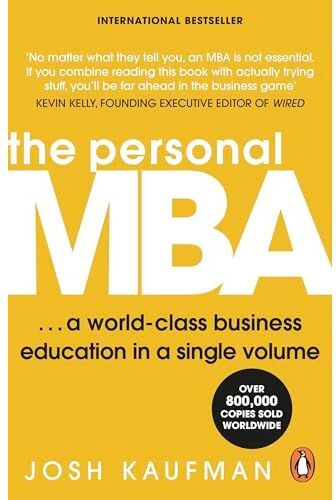
Penguin The Personal MBA: The bestselling business book containing you everything you need to know about marketing, management and leadershipARE YOU TEMPTED TO GO TO BUSINESS SCHOOL? SAVE YOUR MONEY AND READ THE PERSONAL MBA INSTEAD. This bestselling business classic gives you everything you need to transform your business and your career. An MBA at a top business school is an enormous investment in time and cash. And if you don't want to work for a consulting firm or an investment bank, the chances are it simply isn't worth it. The Personal MBA gives you simple mental models for every subject that's key to commercial success. From the basics of products and marketing to the nuances of teamwork and systems, this book distils everything you need to know to take on the MBA graduates and win.10,99 £*Shipping: 2,99 £Secure redirect to the provider
-
How can one recognize main clauses and subordinate clauses?
Main clauses can stand alone as complete sentences, while subordinate clauses cannot. Subordinate clauses often begin with subordinating conjunctions such as "although," "because," "if," "when," or "while." They also often contain a subject and a verb, but they do not express a complete thought on their own. Main clauses, on the other hand, express a complete thought and can function as independent sentences. By identifying these characteristics, one can recognize main and subordinate clauses in a sentence. **
-
How can adverbial clauses be used as subordinate clauses?
Adverbial clauses can be used as subordinate clauses to provide additional information about the main clause. They can modify the verb in the main clause by expressing time, place, manner, condition, reason, purpose, or concession. For example, in the sentence "She went to bed after she finished her homework," the adverbial clause "after she finished her homework" provides information about the timing of the main action "She went to bed." Adverbial clauses are introduced by subordinating conjunctions such as after, before, while, since, because, if, although, etc. **
-
How can subordinate clauses be rewritten as main clauses?
Subordinate clauses can be rewritten as main clauses by removing the subordinating conjunction and making any necessary adjustments to the verb tense or word order. For example, the subordinate clause "because she was tired" can be rewritten as the main clause "she was tired." This transformation allows the subordinate clause to stand alone as a complete sentence. Additionally, any pronouns or other words that were dependent on the subordinating conjunction may need to be adjusted to ensure the new main clause is grammatically correct. **
-
How do I transform subordinate clauses into main clauses?
To transform a subordinate clause into a main clause, you need to make sure that the clause can stand alone as a complete sentence. This means adding a subject and a verb to the clause if it doesn't already have them. You may also need to adjust the word order or add any necessary punctuation. Once these changes are made, the subordinate clause will become a main clause that can function independently within a sentence. **
* All prices are inclusive of VAT and, if applicable, plus shipping costs. The offer information is based on the details provided by the respective shop and is updated through automated processes. Real-time updates do not occur, so deviations can occur in individual cases. ** Note: Parts of this content were created by AI.